Visa refusal: this frontierism hinders African voices in global health
N/A
ABSTRACT
The recurrent denial of visas to African delegates at global health conferences, such as 2022 in Montreal and 2024 in Munich, highlights a glaring inequality that prevents African voices from participating in crucial discussions. These exclusions compromise the effectiveness of global health interventions, by depriving the international community of the expertise of the countries most affected. To resolve this imbalance, conferences must be held in countries with more inclusive access, and visa procedures reformed to ensure truly global and equitable representation.
Introduction
In recent years, the global health sector has come under scrutiny for its inequitable practices, including the systemic exclusion of African professionals from important conferences and forums. While these meetings are supposed to foster cross-border collaboration to tackle global health challenges, a disturbing pattern of visa denials for African delegates has emerged, a stark reminder of the power imbalances that persist in this field.
This problem goes beyond individual inconvenience. The persistent refusal to allow African experts to participate in international health conferences highlights the wider marginalization of the South in global health governance, exacerbating the very inequalities the field claims to address.
Passport privileges are real
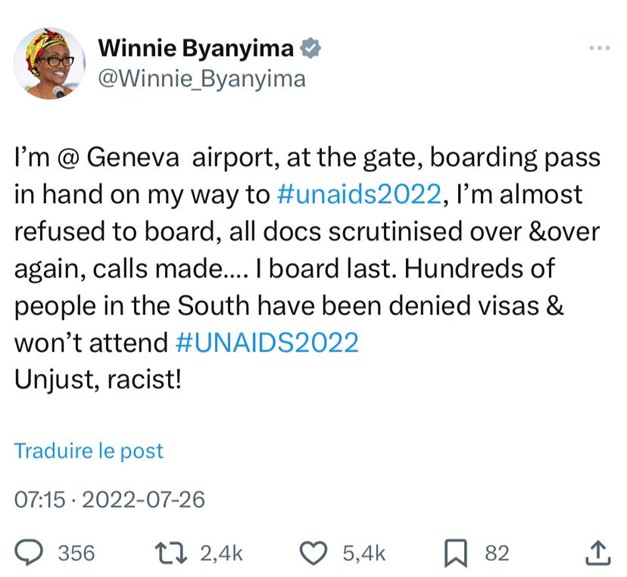
Visa refusals for African delegates have become a recurrent feature of global health conferences held in Western countries. The 2022 International AIDS Conference in Montreal is a high-profile example. Despite the importance of the event and the crucial role of African nations in the fight against HIV/AIDS, many African delegates - representing the countries most affected by the epidemic - were denied visas. The conference organizers themselves acknowledged the problem, but seemed powerless to rectify the situation, which just goes to show how deeply rooted these barriers are. Similarly, at the AIDS conference held in Munich in 2024, a significant number of African participants were denied visas, even though they were guest speakers or key players in the global HIV response.
This is not an isolated problem. Whether at conferences on tuberculosis, climate change or pandemic preparedness, African professionals face bureaucratic hurdles that their counterparts in Western countries do not. The reasons given for visa refusals are often opaque, ranging from vague security concerns to arbitrary financial requirements, leaving delegates in a frustrating limbo. The process is costly, time-consuming, daunting and frustrating, and often leads professionals from the South to give up their place at the table.
This situation distorts not only the diversity of international conferences, but also the global healthcare job market, making it difficult for talent from the South to work in major global healthcare organizations. Restrictions on work visas and complex procedures in the countries where these institutions are based (USA, UK, Switzerland) reinforce these barriers, reducing diversity and inclusiveness in this crucial sector.
Exclusion undermines global health outcomes
What's even more worrying is that this exclusion often extends to leaders (such as the aforementioned UNAIDS Executive Director), scientists and practitioners working in the field, navigating the complexities of epidemics, access to healthcare and local health systems. These experts hold invaluable knowledge of what works in their communities, but are regularly prevented from participating in high-level discussions, resulting in policies and interventions that can be disconnected from realities on the ground.
Take pandemic preparedness, for example, where African countries have gained invaluable experience in managing infectious diseases such as Ebola, HIV and tuberculosis. These experiences provide crucial lessons for global strategies in disease containment, vaccine deployment and health system resilience. Yet when African professionals are denied a seat at the table, this knowledge is lost, and global health strategies are weakened by their absence.
As Celestina Obiekea, virologist at the Nigeria Centers for Disease Control, reports: "One of the most frustrating experiences of my career was being denied visas to participate in global discussions where I had direct expertise. This affected me so much that I came to prepare myself mentally not to take up opportunities requiring visa application or approval procedures".
During the COVID-19 pandemic, the exclusion of African scientists from global forums was evident. As countries scrambled to develop and distribute vaccines, African health experts struggled to make their voices heard in discussions on vaccine equity and distribution. The consequences have been disastrous. Vaccine inequality became a defining issue, with African countries waiting in the wings while wealthier nations stockpiled. The absence of African perspectives in decision-making forums probably contributed to this imbalance, as vaccine deployment strategies were often adapted to the needs and logistics of the North rather than those of the South.
These visa refusals perpetuate the problem of "parachuted" or "colonial" science, a practice whereby Western researchers and nations conduct studies in developing countries without any real collaboration or recognition of the contributions of local researchers. This model dictates solutions to the challenges faced by developing countries, without involving the populations directly concerned in the decision-making process.
Reimagining global health conferences
If global health is to live up to its ideals of equity and inclusion, fundamental changes are needed in the way global health conferences are organized and conducted. While the online and hybrid models introduced during the COVID-19 pandemic have brought some relief, they are not a panacea. Digital access still poses problems in many low-resource regions, and the lack of face-to-face networking opportunities further marginalizes delegates from the Global South.
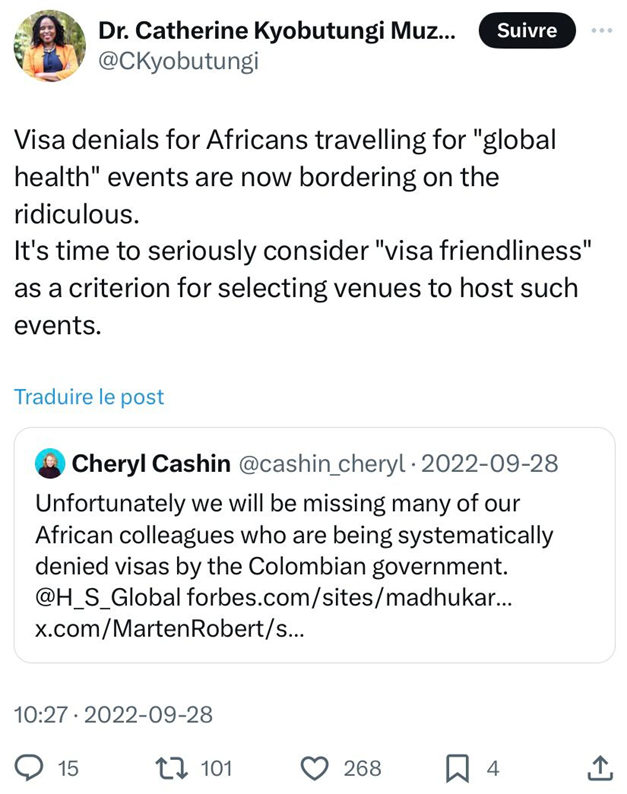
One obvious solution is to organize these conferences in more visa-friendly locations. Countries such as Senegal, Rwanda, Kenya and Thailand, to name but a few, have demonstrated their ability to host major international conferences, with visa policies that are more accommodating to participants from various regions. Holding global health meetings in such locations would not only facilitate the participation of delegates from Africa and other low-income countries, but would also signal a shift in the power dynamics in global health, away from the dominance of Western countries.
However, relocating conferences is only a short-term solution. The real challenge is to dismantle the systemic barriers that prevent African participation. Western countries need to review their visa policies, especially for professionals attending academic and political conferences. This could involve creating special visa categories for conference participants, or implementing fast-track procedures for those invited by reputable global health organizations.
Conclusion
Visa refusals have become a striking symbol of exclusionary practices in global health, where those most affected by health crises are often left out of the discussions that determine the policies that are supposed to concern them directly. To achieve concrete results in the field of health, political decision-makers and international organizations must proactively tackle these inequalities.
More singularly, global health organizations must use their influence to challenge visa policies that undermine the very principles of equity and inclusion they claim to uphold. They should carry out independent assessments of the fairness of conferences, and publish the results in publicly accessible annual reports. The current approach, in which organizers express sympathy for those denied visas, but end up shrugging their shoulders, is no longer tenable.
Tags:
Leave a Comment
Comments
No comments yet. Be the first to comment!