Inoculating the Future? Launch of AVMA and GAVI 2026-2030 Investment Opportunity
N/A
ABSTRACT
The Global Forum for Vaccine Sovereignty and Innovation took place in Paris in June 2024. It saw heads of state, as well as representatives of governments of the European Commission, Africa, as well as of institutions, organizations, including the private sector, and civil society. The main focus was the launch of Gavi’s 2026-2030 Investment Opportunity and of the African Vaccine Manufacturing Accelerator (AVMA). The article attempts to present the highlights of the proceedings.
 |
| Source: Africa CDC |
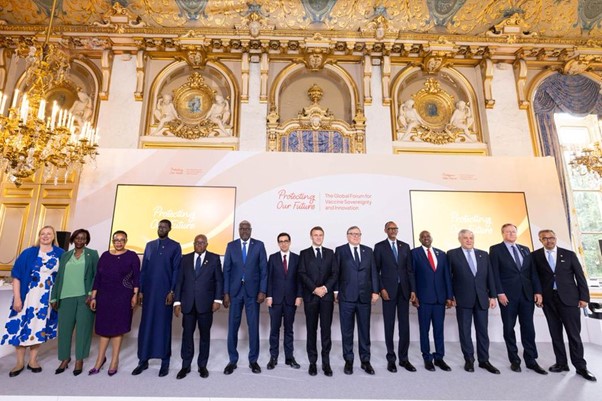
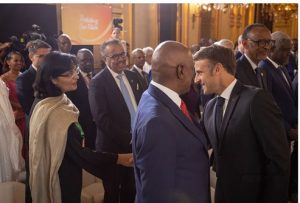
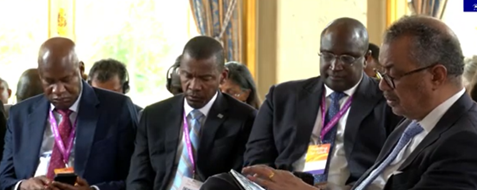
On June 20, 2024, Gavi's 2026–2030 Investment Opportunity and the African Vaccine Manufacturing Accelerator (AVMA) were launched at a Global Forum for Vaccine Sovereignty and Innovation in Paris co-convened by the Government of France, Gavi and the African Union (AU) with Emmanuel Macron, President of the French Republic, Gavi Board Chair, Prof. José Manuel Barrosol and Moussa Faki Mahamat, Chairperson of the African Union Commission as co-hosts along with the Africa Centres for Disease Control and Prevention (CDC).
Gavi at the Forum
 |
| Source: Gavi |
 |
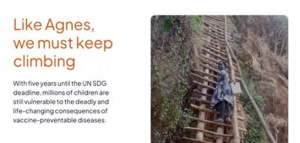
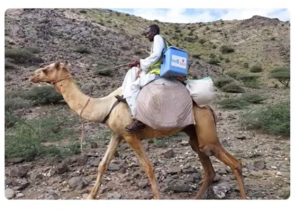
Dr Sania Nishtar, CEO of Gavi had the grace to mention those who make it possible for vaccines to actually reach the children in need. Anne Marie Mbengue Seye, Afrivac, Gavi CSO Steering Committee also did so in a panel discussion hosted by Dr Nishtar (see section on challenges below). Dr Nishtar also screened the images of the persons she lauded for their work - Vaccinator Abdul Qader and Health Worker Agnes who travelled on camel-back and climbed a rope ladder to reach remote communities in Sudan and Uganda, respectively as well as Aboubacar and his family who took part in the vaccine trial for the Ebola virus. In her words, «We owe our health security to people like him».


Also finding mention was Pais Veniama, a paramedic from Kenya who shared that in 2019, the malaria vaccine had brought down the under-5 hospitalization rates, which had brought “a new sense of peace to the hospital wards”.
Dr Nishtar highlighted that Gavi’s vaccine stockpiles are now the largest to date, offering protection against diseases like Ebola, cholera and yellow fever. The preventive vaccine stockpile for Ebola was approved for the very first time, ten years after the outbreak of Ebola had shocked the world. It shows Gavi’s ability for an agile and rapid response during a crisis to a longer-term strategic commitment.
Sustainable and innovative financing model
 |
| Source: Gavi |
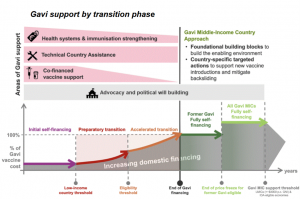
Over the next 5 years, countries will fund a record percentage of the cost of their vaccines contributing over $4 billion by 2030. More than 1 in 4 of the Low Income Countries originally supported by Gavi will be fully funding their own vaccination programs.
Gavi's operational costs remain lean and the Return on Investment (ROI) is $54 to every dollar invested.
Looking to the future, Gavi’s goal in its Strategy 6.0 is to vaccinate 500 children. The HPV vaccine, which could lead to the complete elimination of an entire category of cancer for the first time in history as per Catherine Russell, Executive Director UNICEF, will protect 120 million girls and young women from cervical cancer. Over 50 million children will receive the new malaria vaccine. There is a new health system strategy to drive integration of immunization into Primary Health Care (PHC) even further and this will facilitate 1.4 billion contacts between families and health services by end-2030. The required new funding for Gavi to fulfil these milestones is $9 billion. Early pledges, including during the forum raised $2.4 billion.
The challenges to disease reduction are climate change and the rising risks of AMR. The last was also cited by Dr. Jean Kaseya, Director-General, Africa CDC who mentioned that he had in fact raised the issue of including AMR in the Global Fund with its CEO, Peter Sands given that it kills more people than does HIV, TB and malaria put together.
Significance of AVMA
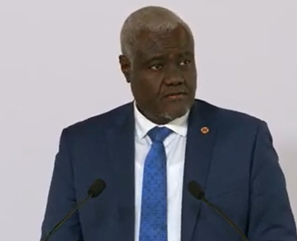
Emmanuel Macron, President of the French Republic commended the African Union for its willingness to consistently put in efforts towards bolstering African sovereignty on the health front given the competing priorities of security, poverty, and food problems, among others.
 |
Gavi and Africa
 |
Funding for AVMA
Over the next decade, Gavi will invest a billion dollars towards the development of African vaccine manufacturing.
 |
The pledges for AVMA raised during the forum amounted to $1.2 billion. Although the Bill & Melinda Gates Foundation also made a commitment, quite inexplicably, in Bill Gates’ video message to the forum, the sum and substance was about Gavi, of which the Foundation had been a co-founder, and which he described as the Foundation’s “best investment”, with no mention of AVMA or Africa.
Pledges for AVMA
Source: Gavi |
Besides the Gavi investment, it is the African Development Bank (AfDB) that has put its formidable financial muscle behind AVMA and other initiatives on the African continent. It has extended $3 billion each for the African Pharmaceutical Action Plan under the aegis of the African Pharmaceutical Technology Foundation (APTF) and Strategy for Quality Health Infrastructure in Africa, which is a partnership between World Health Organization (WHO) and AU. It is through the APTF that access to patented tech, processes, systems needed for local manufacturing will be made possible.
Nana Addo Dankwa Akufo-Addo, President of Ghana also called for the AVMA treasury operations to be conducted through the AfDB, which he pointed out has a global AAA rating and works in the interest of Africa as does Afreximbank Bank (African Export–Import Bank, Banque Africaine). Given that the AfDB’s 60th anniversary had its Board meeting theme as “Africa’s Transformation, the African Development Bank Group, and the Reform of the Global Financial Architecture”, this request from Ghana is a strike for respecting African sovereignty within the global financial landscape as well.
AVMA - Milestones
Dr Amadou Sall, CEO of the Dakar Pasteur Institute, Senegal (which also partners with Morocco, Tunisia and Algeria) and the Chair of the Pasteur Network stated that AVMA is a model of a "holistic, collective approach". The following section showcasing the same is a summary based on the forum proceedings and is by no means an exhaustive calendar listing of AVMA’s journey.
Process towards sovereignty in manufacturing for the health sector was initiated in 2021 by the African Union with Senegal, South Africa, Ghana and Rwanda.
In 2021, African Union through Africa CDC launched a framework for action, “A New Public Health Order for Africa.”
In February 2022 under French presidency there was a summit between EU and AU. In May 2022, Leon Mutesa, Director, Center for Human Genetics, University of Rwanda became Rwanda’s representative on the Board of the International Vaccine Institute headquarters.
In 2022, under Germany’s presidency, Senegal (then chair of AU) and South Africa were invited to the G7 Leaders’ Summit. The G20 Compact with Africa launched in 2017, to attract private investments has a G20 Finance Track with the Africa Advisory Group under South African-German Co-Chairmanship as its steering body. Germany has engaged with Ghana, South Africa, Senegal, Rwanda in training experts in regulatory frameworks and developing pilot plants for vaccine technologies.
At the Italy-Africa summit in January 2024, Italy unveiled the Mattei Plan for Africa as a long-term strategic development cooperation policy. Africa also featured in a session under the aegis of the recent G7 under Italy’s Presidency.
Ambitious initiative for R&D led by WHO chief Tedros Adhanom Ghebreyesus and Charles Gore, Executive Director, the Medicines Patent Pool (MPP):
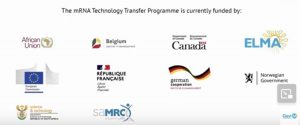
In April 2023, establishment of the mRNA Technology Transfer Hub in South Africa under the aegis of WHO, MPP and Act-Accelerator/COVAX as well as support from Germany. In this consortium, Afrigen Biologics is the entity mandated to establish mRNA vaccine production technology, South African Medical Research Council (SAMRC) is providing the research and Biovac is the first manufacturing spoke.
In December 2023, the first end-to-end mRNA production facility in Africa was inaugurated in Rwanda.
In February 2024, the International Vaccine Institute announced a new African Regional Office in Rwanda and Advancing Vaccine End-to-end Capabilities in Africa (AVEC) Project Office in Kenya.
In June 2024, a Korea-Africa summit saw the Africa CDC and the Korea Disease Control and Prevention Agency along with the International Vaccine Institute resolve to work together. A Biomanufacturing Training Hub operates from Korea.
The National Regulatory Agencies of Rwanda, Botswana and Ghana are moving towards, among other countries, maturity level 3 that is defined by WHO as “a stable, well-functioning, and integrated regulatory system capable of effective oversight and quality assurance”.
Challenges
 |
Need for Innovation
 |
Peter Sands, CEO, Global Fund, among others, pointed to the importance of also ensuring regionalization of tests, treatment and vital preventative tools including insecticide-treated nets for malaria.
The need to reduce the environmental impact of production was highlighted by Thomas Triomphe, Executive VP, Vaccines, Sanofi, who stated that it will continue to invest in yellow fever vaccine using a unique vero-cell-culture technology.
Dr Amadou Sall, CEO of the Dakar Pasteur Institute, Senegal and Chair of the Pasteur Network announced investments for innovative antigen platforms for measles-rubella and mRNA vaccines.
Dr Yeong-Ok Baik, CEO, EuBiologics, South Korea mentioned that the new oral cholera vaccine (OCV), Euvichol-S has a simplified manufacturing process due to reducing its components, thereby significantly increasing production capacity and reducing operational costs to make available a low-cost vaccine.
Marisol Touraine, Chair of Unitaid Executive Board underlined the need of organizing health systems not only from a technical and medical perspective such as innovative solutions for temperature-resistant treatment, and to manage postpartum hemorrhaging (PPH), but also social innovation to strengthen systems.
Address the demand side
Makhtar Diop, Managing Director of the International Finance Corporation (IFC) agreed that the local production should not end up as a “white elephant” because of absence of demand, a point raised by Stavros Nicolaou, Senior Executive responsible for Strategic Trade Development, Aspen Pharmacare Group, South Africa, which had re-allocated its humungous sterile capacities and capabilities for the production of the Covid vaccine only to find no takers for it at the time within or outside the country. You can read more about it in this Reuters report.
Address vaccine hesitancy
 |
 |
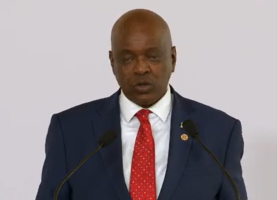
Naha Mint Hamdi Ould Mouknass, Minister of Health, Mauritania mentioned the outbreak of measles as a proxy indicator of the failure of routine immunization reaching those in need and rural areas being a neglected category. Prof Pate stated that Nigeria, too, has seen outbreaks of diphteria and measles. This shows the pressing need to reframe conversations around routine immunization so as to get parents to make vaccination a routine.
The words of Farrah Losper, Board Chair, African Vaccine Manufacturing Institute (AVMI)’s summarize the long road ahead: “Need political will and policy, regional cooperation between African countries and preference for [the full spectrum of] vaccines and therapeutics manufactured in Africa for pooling demand, harmonizing standards, economies of scale.”
Conclusion
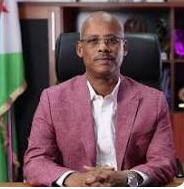
French President Macron spoke of health being now a geopolitical issue. But how it is to be dealt with was answered by Ahmed Robleh Abdilleh, Minister of Health, Djibouti.
 |
 |
€
10 million for a global initiative to combat it.
Figure 1: Cholera cases and reported deaths from WHO regions of Africa and Europe as of 26 May 2024

David Cameron, Secretary of State for Foreign, Commonwealth and Development Affairs, United Kingdom (UK) noted that earlier it was about the monies required to purchase vaccines. But Gavi changed the way it worked by making use of that purchasing power to drive down the prices of vaccines and deliver them across the globe. “Do not think in terms of lives saved but about lives lived”, he urged painting a visual picture of teachers in full classrooms.
 |
Tags:
Leave a Comment
Comments
No comments yet. Be the first to comment!